Tuesday, July 4, 2017

ANARCHISM IN INDIA

In the introduction to Democracy and Power, the Delhi Lectures of Noam Chomsky (Three Essays Collective), Jean Drèze examined the curious absence of Anarchism from Indian revolutionary traditions. Unlike the disdain shown both by Right and the Leninist left, Drèze attempts to extricate anarchist politics and ideas from the web of misinterpretations and create a space for anarchist ideas in the matrix of Indian resistance cultures. You can get Democracy and Power, the Delhi Lectures of Noam Chomsky with an introduction byJean Drèze, directly from Three Essays Collective
In India as elsewhere, anarchist thought is widely misunderstood. As Bhagat Singh, one of the few Indian revolutionaries who had explicit anarchist leanings, put it: “The people are scared of the word anarchism. The word anarchism has been abused so much that even in India revolutionaries have been called anarchist to make them unpopular.”
How and why the anarchist tradition came to be comprehensively sidelined in India is not entirely clear. The fact is that very few left leaders, writers or activists in India think of themselves as anarchists. And yet it seems to me that many of them have drawn inspiration from anarchist thought in one way or another, and that we would greatly benefit from a more explicit recognition of this anarchist influence – actual and potential.
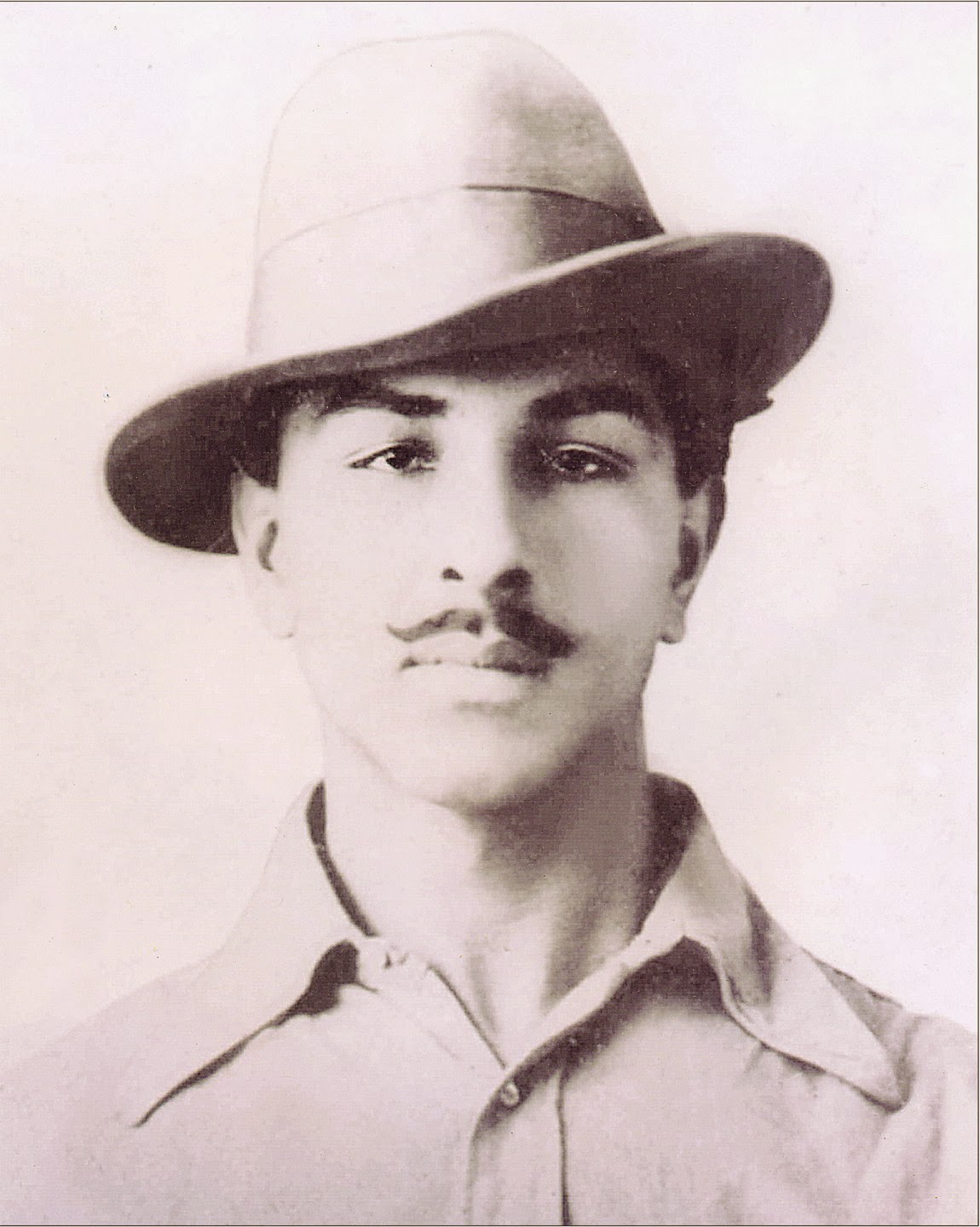
Bhagat Singh (27th September 1907 – 23 March 1931)
There are varieties of anarchist thought (some are pretty weird), just as there are varieties of socialist thought; my concern here is with what one might call cooperative anarchism or libertarian socialism. This is more or less the opposite of what anarchism is often claimed to mean by those whose aim, as Bhagat Singh put it, is to make revolutionaries unpopular. This aim is typically achieved by portraying anarchists as impulsive bomb-throwers who want to destroy the state through violent means.[1] Resistance to state authority and oppression is certainly one of the core principles of anarchism. It is also true that many anarchists believe in the possibility of a state-less society, and perhaps even in the need for a violent overthrow of the state. But anarchist thought certainly does not start from there. In fact, as Chomsky has argued, it is even possible for a committed anarchist to lend temporary support to some state institutions vis-à-vis other centres of power: “In today’s world, I think, the goals of a committed anarchist should be to defend some state institutions from the attack against them, while trying at the same time to pry them open to more meaningful public participation – and ultimately, to dismantle them in a much more free society, if the appropriate circumstances can be achieved.”[2]
If anarchist thought does not begin with the idea of a state-less society, let alone the violent overthrow of the state, where does it start from? It starts, I believe, from the same point as these lectures – a deep suspicion of all authority and a principled opposition to the concentration of power, whether it is the power of the state, the corporation, the church, the landlord or the head of a family. As Chomsky argues, this does not mean that all authority and power is illegitimate, but it does mean that if it cannot be justified, it must be dismantled.
Some people believe, against all evidence, that power becomes harmless if it is exercised on behalf of the working class. This is the basis of the hope that a “dictatorship of the proletariat” would pave the way for the withering away of the state and a state-less society. The dangers of this idea were exposed early on by anarchist thinkers such as Michael Bakunin, a contemporary of Karl Marx, who said: “I wonder how Marx fails to see that… the establishment of such a dictatorship would be enough to kill the revolution and distort all popular movements”.
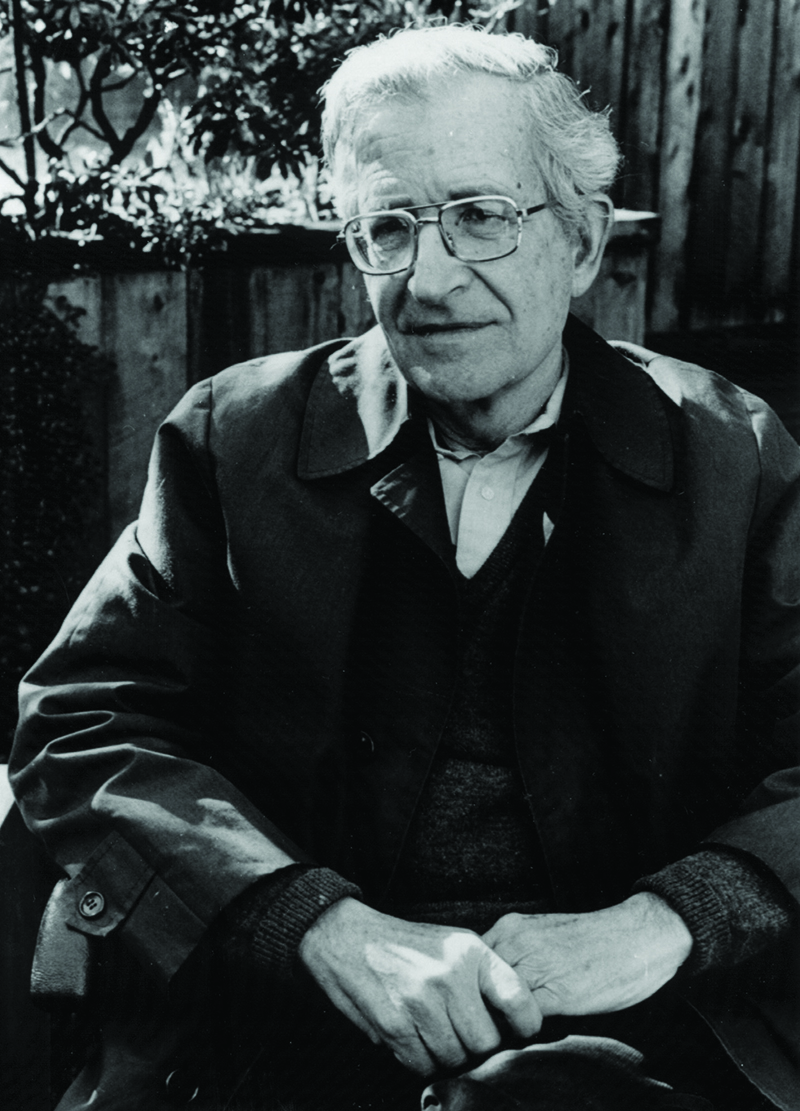
Noam Chomsky is an American linguist, philosopher, cognitive scientist, logician, political commentator, social justice activist, and anarcho-syndicalist advocate.
The fact that anarchist thinkers predicted with great clarity what would happen in societies based on an apparent dictatorship of the proletariat is not the least reason why it is worth paying more attenion to them. Similarly, anarchist thought can help us to develop a healthy suspicion of various forms of vanguardism, including the notion that left intellectuals are the vanguard of the proletariat. This notion is of course a terrific deal for intellectuals, since it puts them in command. Vanguardism found a fertile soil in India with its long tradition of Brahminism, guru worship, and deference to authority in general. It is at variance with the spirit of anarchism, which includes a basic faith in people’s ability to take charge of their own lives and struggles.
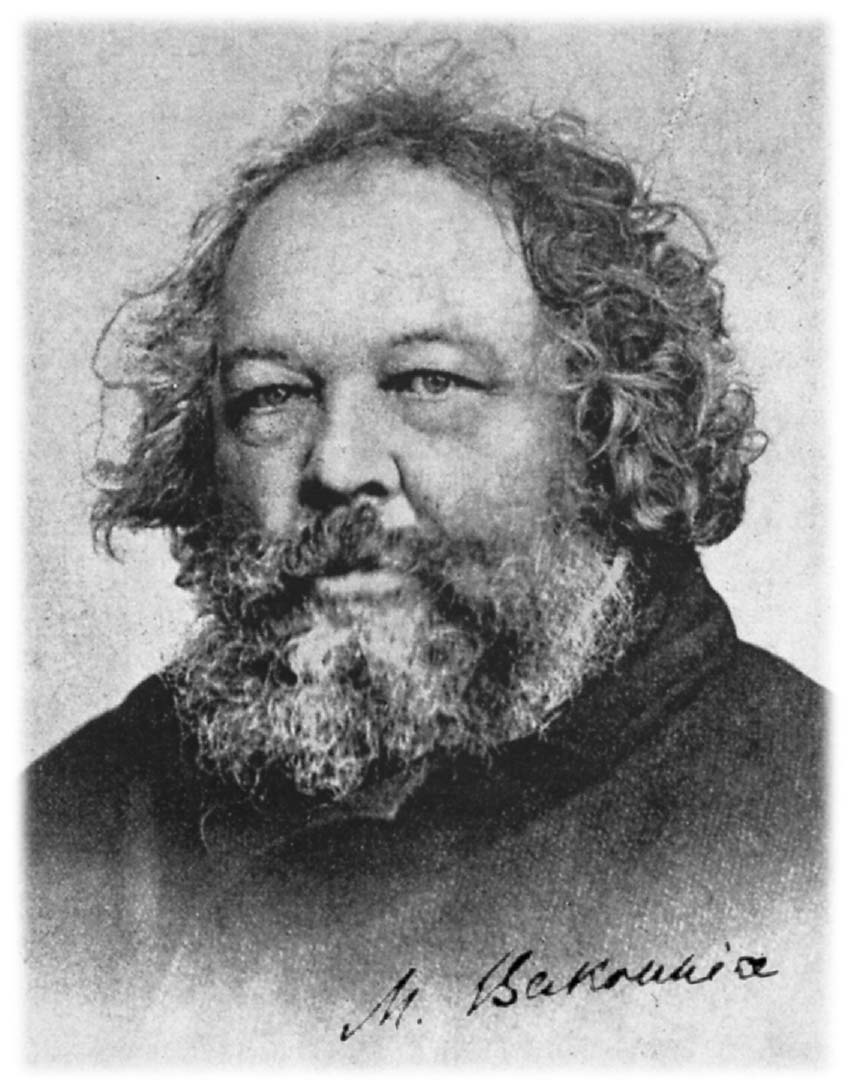
(30 May 1814 – 1 July 1876) was a Russian revolutionary anarchist, and founder of collectivist anarchism
Indeed, anarchist thought and libertarian socialism are not limited to a fundamental critique of power and authority – far from it. They also build on constructive ideas about social relations and economic organization, including voluntary association, mutual aid, self-management, and the principle of federation. The basic idea is that a good society would consist, as John Dewey put it, of “… free human beings associated with one another on terms of equality”.
One of the most eloquent exponents of the power of free association and voluntary cooperation was Peter Kropotkin, the 19th-century anarchist and author of Mutual Aid. A zoologist and geographer by profession, Kropotkin spent many years in Siberia, where he observed countless examples of mutual aid among animals. Just to give one example, he observed how, just before the winter, large numbers of deer would gather from hundreds of miles around and congregate at the precise point of a river (the Amur) where it was narrow enough for a large herd to be able to cross it safely and reach greener pastures on the other side.[3] He concluded that cooperative behaviour is a plausible outcome of biological evolution – an idea that is being rediscovered today by evolutionary biologists and game theorists.
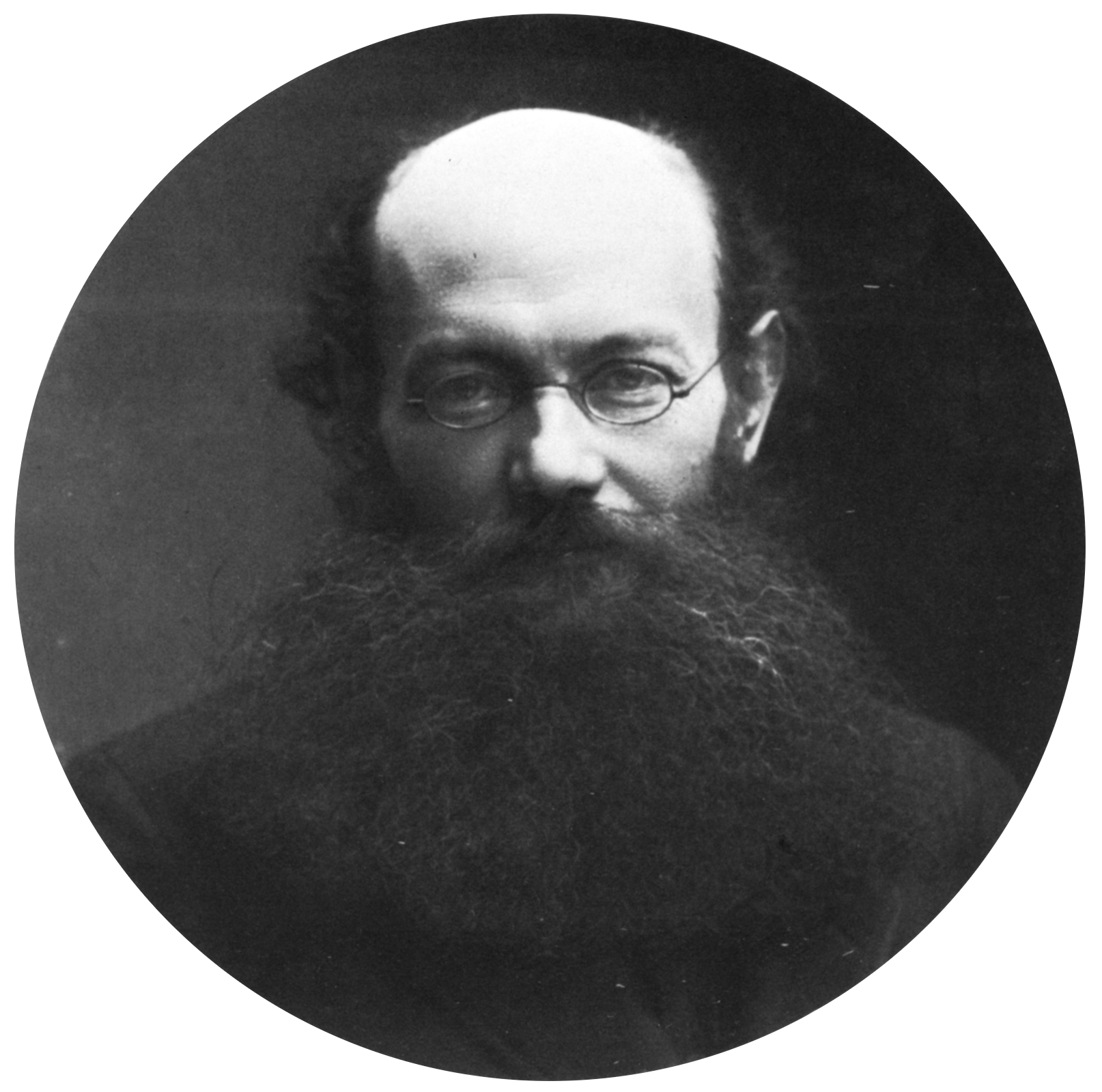
[December 9, 1842 – February 8, 1921) was a Russian geographer, economist, activist, philologist, zoologist, evolutionary theorist, philosopher, writer and prominent anarchist.
[December 9, 1842 – February 8, 1921) was a Russian geographer, economist, activist, philologist, zoologist, evolutionary theorist, philosopher, writer and prominent anarchist.
Kropotkin went on to study cooperation in human societies (which involves much more than biological evolution) and documented in great detail how mutual aid played a pervasive role at all stages of human history, despite being often repressed by the privileged and powerful. More than a hundred years after the publication of Mutual Aid, we have many more examples of human activities and institutions based on principles of voluntary association and mutual aid. Anarchist principles of political action have played an important role in the international peace movement, the environmental movement, the fall of the Berlin Wall, the Arab Spring, the Chiapas uprising, the World Social Forum and the right to information movement in India. There have been vibrant experiments with workers’ cooperatives and self-management in Spain, Argentina, and Kerala, and also other examples of economic applications of anarchist principles such as the free software movement. In India, the social organization of many tribal communities is still based on a strong tradition of mutual aid and participatory democracy, evident for instance in institutions like exchange labour and Gram Sabhas.
Even the edifice of electoral democracy rests on a simple act of mutual aid, namely participation in elections: voting does not involve any personal gain for anyone, since a single person’s vote cannot influence the outcome of elections, and yet most people do vote, often losing a day’s wages and braving long queues, harsh weather or even physical danger. Without mutual cooperation, there would be no democracy, even in the most elementary form of electoral democracy. As this example illustrates, mutual cooperation does not necessarily require altruism or self-sacrifice; it can also build on simple habits of thought (specifically, habits of sociability and public-spiritedness) that an enlightened society should be able to foster.
Coming back to the left tradition in India, elements of anarchist thought can be found in one form or another in the life and writings of many Indian thinkers, even if they never thought of themselves as anarchists, and indeed were not anarchists. I have already mentioned Bhagat Singh, who had clear anarchist sympathies. Just to give one or two other examples, Ambedkar was not an anarchist by any means and yet we can find traces of anarchist thought in his writings, for instance his notion of democracy as a “mode of associated living” based on “liberty, equality and fraternity”. I think that many anarchists would also be proud of Periyar, who taught people to resist the oppression of caste, patriarchy and religion and have faith in themselves. Even some leading Marxist thinkers belong here: for instance, Ashok Rudra’s critique of “the intelligentsia as a ruling class” has some affinity with Chomsky’s analysis of the role of intellectuals in the modern world. Also within the Marxist tradition, here is something K. Balagopal (one of India’s most committed and thoughtful left activists) wrote around the end of his lifelong engagement with a variety of popular struggles:
“What seems to be required are ‘localised’ (both spatially and socially) movements that are specific enough to bring out the full potential and engender the full self-realisation of various oppressed groups, subsequently federated into a wider movement that can (in a free and democratic way) channelise the aroused energies into a broad movement.
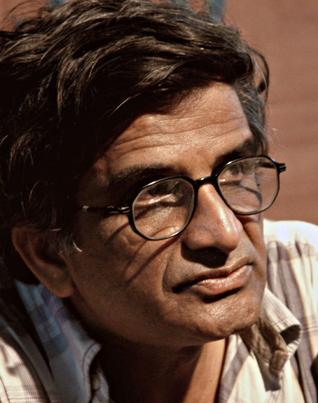
 (10 June 1952 – 8 October 2009) was an uncompromising human rights activist, mathematician and lawyer who was known for his work on the issue of civil liberties and human rights. He was a staunch civil liberties activist in Andhra Pradesh.
(10 June 1952 – 8 October 2009) was an uncompromising human rights activist, mathematician and lawyer who was known for his work on the issue of civil liberties and human rights. He was a staunch civil liberties activist in Andhra Pradesh.
This is quite different from the Leninist notion of a single vanguard party that would centralise all knowledge within itself and direct (top down) the struggles of the suppressed masses. In such an effort, the suppressed masses would not even be half awakened to their potential. Even if such a party were to claim that it learns from the people, and even if [it] were to honestly try to do so, the very strategy would be inadequate. If there can at all be a single ‘party’ which would lead a movement for social transformation, it can only be a federally structured organisation, whose free and equal units would be the political units, centred on the self-directed struggles of various sections of the deprived.”[4]
This sounds to me like anarchist thought par excellence. As I have illustrated earlier, anarchist principles are alive not just in Indian political thought but also in social life and popular movements. None of this is to say that the time has come to embrace anarchism (or libertarian socialism) and give up other schools of thought. But greater openness to anarchist ideas would certainly bring some fresh air. For instance, I believe that anarchist thought could help us to think more clearly about the relation between caste and class, beware of all authoritarianism, enlarge our understanding of democracy, and open our eyes to the workings of power (for instance, patriarchy and caste discrimination) within our own movements. Last but not least, anarchist thought can inspire us to change the world without waiting for state power, and give us confidence that democratic struggles here and now can be, as Bakunin put it, “the living seeds of the new society which is to replace the old world”.
1.Bhagat Singh did throw a bomb once (in the chamber of the Central Legislative Assembly), but it was little more than a firecracker and the gesture was largely symbolic. There were no casualties.
2.Chomsky (1996), Powers and Prospects: Reflections on Human Nature and the Social Order (London: Pluto), p. 75. This statement must be read in the light of the distinction Chomsky makes between “goals” and “visions” (p. 70): “By visions, I mean the conception of a future society that animates what we actually do, a society in which a decent human being might want to live. By goals, I mean the choices and tasks that are within reach, that we will pursue one way or another guided by a vision that may be distant and hazy.”
3.Kropotkin, Peter (1902), Mutual Aid: A Factor of Evolution (London: Heinemann), Chapter 2.
4.Balagopal, K. (2011), “Popular Struggles: Some Questions for Communist Theory and Practice”, in Ear to the Ground (New Delhi: Navayana), p. 375.

Monday, April 17, 2017

The Systems View of Life: A Unifying Vision

The Systems View of Life: A Unifying Vision by Fritjof Capra and Pier Luigi Luisi is an interdisciplinary book which presents ”a unified systemic vision that includes and integrates life’s” different dimensions (p.xii). All living systems are ”highly nonlinear” networks where there are ”countless interconnections” (p.xii). Here is a summary of the book together with some conclusions.

Introduction (pp.1--16)
The systems view of life is ”a change from seeing the world as a machine to understanding it as a network” (p.4). Greek philosophy, in the sixth century BC, ”understood the order of the cosmos to be that of a living organism” (p.5). The shift from an organic to a mechanistic worldview ”was initiated by … René Descartes (1596-1650)” who is ”regarded as the founder of modern philosophy” (p.8).

A living system is "an integrated whole whose … properties cannot be reduced to its parts" (p.10). These properties "arise from the interactions and relationships between the parts" (p.10). Outlines of a "coherent theory of living systems … are now emerging" (p.12). This is the subject of the book.

We need to "question … the old paradigm" (p.12). The "paradigm shift also involves … changes of values" (p.13). There is a "striking connection between changes of thinking and of values" (p.13). The "connection between an ecological perception of the world and corresponding behavior is not a logical but a psychological connection" (p.14). "Logic does not lead us from the fact that we are an integral part of the web of life to certain norms of how we should live (p.14). However, if we have a "deep ecological experience of being part of the web of life, then we will … be inclined to care for all living nature" (p.15). "The paradigm shift … at its deepest level, involves a perceptual shift" (p.15).

The mechanistic worldview (pp.17--60)
As the organic view of nature was replaced by the metaphor of the world as a machine, "the goal of science became … to dominate and control nature" (p.21). All "scientific theories are reductionist in the sense that they need to reduce the phenomena described to a … number of characteristics" (p.24). Scientists "in treating living organisms as machines, tended to believe that they are nothing but machines" (p.26). The adverse consequences of this "have become especially apparent in medicine" (p.26). "Economists [also] generally fail to recognize that the economy is merely one aspect of the whole ecological and social fabric" (p.56). Unlimited growth "on a finite planet can only lead to disaster" (p.56).

As the "metaphor of organizations as machines" has taking hold, it has generated "mechanistic theories of management" with "clearly defined lines of command and communication" (p.58). During the Industrial Revolution "efficient operation of the new machines required major changes in the organization of the workforce" (p.58). The workforce was disciplined "to accept the rigorous routines [required] by factory production" (p.58).

Interestingly, Max Weber (1864-1920) "was very critical of the development of mechanistic forms of organization" (p.58). Weber observed "the parallels between the machination of industry and bureaucratic forms of organization" (p.58). He was concerned about "the mechanization of human life, the erosion of human spirit, and the undermining of democracy" (p.58). Weber's contemporary, Frederick Taylor (1856-1915), "perfected the engineering approach to management" (p.58). The organization's "structure and goals are designed by management … and are imposed on the organization" with "top-down control" (p.59). The "design of formal structures, linked by clear lines of communication, coordination, and control, has become almost second nature" (p.59).

Transcending "the mechanistic conceptions of health, the economy, or biotechnology" and "the mechanistic view of organizations" is "critical for the survival of or human civilization (p.59).

The rise of systems thinking (pp.61--126)
"Throughout the living world, we find living systems nesting within other living systems" (p.65). Living systems act both as "parts and wholes" (p.65). There is both "an integrative" and "a self-assertive" tendency (p.65). The "essential properties" of living systems are "properties of the whole" (p.65). "The great chock of twentieth-century science has been that living systems cannot be understood by analysis" (p.66).

There are "three kinds of living systems - organisms, parts of organisms, and communities of organisms" (p.67). Living systems "at all levels are networks" and consists of "networks within networks" (p.68). "Whenever we look at life, we look at networks" (p.95). Nature shows us "a complex web of relationships between … parts of a unified whole" (p.68). "There is stability, but this stability is one of dynamic balance" (p.75). All living systems are "open systems" which need "a continual flux of matter and energy" (p.86).

Norbert Wiener (1894--1964) introduced the term "cybernetics," from the Greek kybernetes ("steersman"), in the 1940s. Wiener defined cybernetics as the science of "control and communication in the animal and the machine" (p.87). "All major achievements of cybernetics originated … in mechanistic models of living systems" (p.89). Interestingly, Norbert Wiener made "a clear distinction between a mechanistic model and the non-mechanistic living system it represents" (p.93). Ross Ashby (1903--1972), who was "the leading theorist of the cybernetics movement" in the 1950s and 1960s, had, on the other hand, a "strictly mechanistic outlook" (p.93). For Ashby, there was "no creativity, no development, no evolution" (p.97).

Even "the simplest living system … is a highly complex network" (p.98). "Nonlinear dynamics … represents a qualitative rather than a quantitative approach to complexity and … systems thinking" (p.99). The systems view is a shift of perspective "from objects to relationships, from measuring to mapping, from quantity to quality" (p.99). Nonlinear phenomena are "an essential aspect of the network patterns of living systems" (p.105). Nonlinearity has brought about a "shift of emphasis from quantitative to qualitative analysis" (p.105).

The "spontaneous emergence of order at critical points of instability" is "one of the hallmarks of life" (p.116). The "understanding of pattern[s] is crucial to understand the living world" (p.126).

A new conception of life (pp. 127--339)
Humberto Maturana and Francisco Varela coined the term "autopoiesis", which means "self-making", in the 1970s (p.129). The main characteristic of life is "self-maintenance" (p.129). A living organism "does not need any information from the outside to be what it is, but it is … dependent on outside materials in order to survive" (p.134). Life can be seen as "a system of interlocked autopoietic systems" (p.135). "Autopoiesis is the particular self-organization of life" (p.135).

There is "a clear difference between the ways living and nonliving systems interact with their environments" (p.136). If you "kick a stone, it will react" (p.136). If you "kick a dog, it will respond" (p.136). "The interaction with the environment … is determined by the internal organization of the living organism" (p.141). A living organism is "capable of cognition (the process of knowing)" (p.142). The "living organism and the environment become one through cognitive interactions" (p.143). "A particular combination of self-organization and emergence gives rise to self-reproduction" (p.145).

Dynamic systems "generally operate far from equilibrium, and yet are … stable, self-organizing structures" (p.158). In static systems, "self-organization and the resulting emergent properties are relatively simple concepts" (p.180). In dynamic systems, however, "self-organization and emergence are subtle and complex" (p.180). "New structures … and forms of organization may arise … in situations of instability, chaos, or crisis" (p.180).

The "appropriate way of approaching nature … is not through domination and control but through respect, cooperation, and dialogue" (p.180). In the living world, "history plays an important role" and "the future is uncertain" (p.180). "Life … cannot be explained in reductionistic terms" (p.181). All living forms "are linked together to each other by a network of parenthood" (p.182). "Cooperation is clearly visible … at many levels of living organisms" (p.202). "The planetary network of bacteria," for example, "has been the main source of evolutionary creativity" (p.192). Another example is "symbiosis, the tendency of different organisms to live in close association with one another" (p.202).

In living organisms, "there is no easy way to separate instructions from the way they are carried out, to distinguish plan from execution" (p.206). The "principle of structural determinism, … implies that only those changes can be accepted that are consistent with the existing inner structure and organization of the living organism" (p.214). The change must also be consistent with the organism's "self-maintenance" (p.214). Evolution is "complex, highly ordered, and ultimately cognitive" (p.215). It is "an integral part of life's self-organization" (p.215).

One important implication of "the new systemic understanding of life" is a new understanding of "the nature of mind and consciousness" (p.252). The "phenomenon of mind" is connected with the "phenomenon of life" (p.253). In other words, "cognition is the very process of life" (p.254). "The organizing activity of living systems, at all levels of life, is mental activity" (p.254). "Mind - or, more accurately, mental activity - is immanent in matter at all levels of life" (p.254).

"Every living organism continually renews itself" while maintaining "its overall identity or pattern of organization" (p.255). Living organisms create "new structures - new connections in the network" (p.255). "Living systems are autonomous" (p.255). Living organisms respond "to environmental changes," and "these changes" alter future responses. This "modification of behavior on the basis of previous experience" is learning (p.255). Continuing "adaptation, learning, and development" are key characteristics of all living beings (p.255). "We can never direct a living system; we can only disturb it" (p.256). A living system has the "autonomy to decide what to notice and what will disturb it" (p.256).

"Describing cognition as the breath of life seems to be a perfect metaphor" (p.256). Mind is "the process of cognition, which is identified with the process of life" (p.257). At all levels of life, "mind and matter, process and structure, are inseparably connected" (p.257). Consciousness "emerges when cognition reaches a certain level of complexity" (p.257). Consciousness is "a cognitive process" (p.260) which "involves self-awareness" (p.258). Conscious experience is "an expression of life, emerging from complex neural activity" (p.265). Mind and body "are two complementary aspects of life" (p.273). Primary, or core, consciousness "provides the organism with a transient sense of self (the core self) in the act of perception" (p.274), while "reflective consciousness" is "the process of cognition … we experience as thought" (p.274).

The "pattern of organization of any system … is the configuration of relationships among the system's components" (p.301). This "configuration of relationships" gives the system "its essential characteristics" (p.301). The "structure of a system" is its "physical embodiment of its pattern of organization" (p.302). The "process of life" is the "continual embodiment of the system's pattern of organization" (p.302). These are three perspectives on life: "organization, structure, and process" (p.302). This is the "trilogy of life" (p.303).

The trilogy of life can, in more general terms, be expressed as "form (or pattern of organization), … matter (or material structure), and … process" (p.304). Meaning is added to "the other three perspectives" in order to "extend the systemic understanding of life to the social domain" (p.304). Meaning is "a shorthand notation for the inner world of reflective consciousness, which contains a multitude of interrelated characteristics" (p.304). Human action "flows from the meaning that we attribute to our surroundings" (p.304). Human language "involves the communication of meaning" (p.304).

Living systems "exhibit similar patterns of organization" (p.305). "The network pattern, in particular, is … very basic" (p.305). "All living systems are … networks within networks" (p.306). "A social network, too, is a nonlinear pattern of organization" (p.306). However, "organisms and human societies are very different types of living systems" (p.307). "Human beings can choose whether and how to obey a social rule; molecules cannot choose" (p.307). "Meaning is essential to human beings" (p.309). In "acting with intention and purpose … we experience human freedom" (p.309). The "behavior is constrained but not determined by outside forces" (p.309). As human beings, "we experience this … as the freedom to act according to our own choices and decisions" (p.309).

"Bringing life into human organizations … increases their flexibility, creativity, and learning potential" (p.320). People need to "feel that they are supported … and do not have to sacrifice their integrity to meet the goals of the organization" (p.320). However, the economic environment today "is not life-enhancing but increasingly life-destroying" (p.320). We need to "change our economic system so that it becomes life-enhancing rather than life-destroying (p.321). This change will "be imperative not only for the well-being of human organizations but also for the survival … of humanity as a whole" (p.321). The "new unifying vision of life … has important implication for almost every field of study and every human endeavor" (p.322).

"From a systems point of view, … illness results from patterns of disorder" (p.327). Health is "a multidimensional and multileveled phenomenon" (p.327). "Lack of flexibility manifests itself as stress" (p.356). "Loss of flexibility means loss of health" (p.328). From a systems view of life "the current health revolution can be seen as part of a global movement dedicated to creating a sustainable world" (p.338).

Sustaining the web of life (pp. 339--452)
There are different meanings of "self-organization" (p.346). "To cyberneticists … self-organization meant the … emergence of order in machines featuring feedback loops" (p.346). In complexity theory self-organization is the "emergence of new order … governed by nonlinear dynamics" (p.346). And, in ecosystems self-organization is understood as "dissipative structures operating far from equilibrium" (p.346). There is, however, "almost total silence on the question of autopoiesis in ecosystems" (p.347). We need to "understand the principles of [self-]organization that ecosystems have evolved" (p.353). Ecology is of "paramount practical importance" (p.361).

The "major problems of our time … cannot be understood in isolation" (p.362). The fundamental dilemma is "the illusion that unlimited growth is possible on a finite planet" (p.363). "Social and environmental costs" are not included in economic activities (p.363). There is "a widening gap between the rich and the poor" (p.363). All "ethical dimensions are excluded" (p.378). "Global capitalism … exacerbates" poverty and social exclusion (pp. 384--385). There are also "actively misleading" campaigns that "systematically create doubt and confusion … concerning the threat of global warming" (p.388). "This is why the systems view of life" is very important and "has tremendous practical relevance" (p.392). There are "hundreds of systemic solutions being developed all over the world" (p.393).

It seems as a "more fluid system of global governance would be more appropriate for today's world," where power is increasingly shifted "to regional and local levels" (p.398). This includes the "shift from governments serving corporations to governments serving people and communities," as well as respect for "core labor, social and other human rights" (p.397).

The most important reformation of "the corporation will be to expose the core myth that shareholder returns must be maximized at the expense of human and ecological communities" (p.400). This means "reviving the traditional purpose of the corporation to serve the public good" (p.400). A "fundamental issue … is ownership" (p.401). "Conventional corporate ownership" is an example of "extractive ownership" (p.401). A new "generative ownership" is needed, which "generates well-being and real, living wealth" (p.401).

"Unfortunately, … systemic thinking is still very rare among … corporate and political leaders" (p.407). The "world has to act now or face devastating … consequences," but there is "lack of political will" (p.411). There is an "erroneous belief that nature can be subjected to human control" (p.437). We "need to honor, respect, and cooperate with nature" (p.442). And "we can learn valuable lessons from nature's ecosystems" (p.442). "We have the knowledge and the technologies to build a sustainable world" (p.452). What is needed is "political will and leadership" (p.452). "Major breakthroughs" are needed "to turn the tide" (p.452).

Conclusions
Fritjof Capra och Pier Luigi Luisi's book is truly impressive! The amount of materials covered is broad indeed. The Systems View of Life: A Unified Vision is an attempt to integrate life's biological, cognitive, and social dimensions in a unified systems view of life. In a way, I think Capra and Luisi are brave in taking such a broad sweep across so many different areas. Even if you take a broad sweep, it will still be too narrow. And what you gain in breadth, you risk losing in depth. Overall, I think Capra and Luisi have succeeded in integrating many different perspectives. The book certainly broadened my own perspectives. The main value of the book is the integration of the different ideas, models, and theories into a single framework.

Monday, February 20, 2017

நதிகளை ஏன் இணைக்கக்கூடாது ?

நதிகளை ஏன் இணைக்கக்கூடாது ?

நதி நீர் வீணாக கடலில் கலக்கிறது என்பதை பலமுறை செய்திகளில் கேட்டிருக்கிறோம். இங்கே "வீண்" என்று சொல்லப்படுவது சரிதானா? நதி நீர் கடலில் கலப்பது என்பது இயற்கை சுழற்சியின் ஒரு பகுதி. ஆயிரம் ஆயிரம் ஆண்டுகளாக இது நடந்து கொண்டே இருந்தது. கடந்த இரண்டு நூற்றாண்டில் ஏற்பட்ட மாற்றங்களால் நதி என்பது தேக்கிவைக்க்பட வேண்டிய ஒன்று என நம் பொதுபுத்தியில் பொதிந்து போயிற்று. நதி என்பது மனித பயன்பாட்டுக்கு மட்டுமே என்ற சுயநலச் சிந்தனை நம் எல்லோருக்கும் மீண்டும் மீண்டும் ஊடகங்களால் போதிக்கபடுகிறது.


நதிகள் இணைப்பை பற்றி பேசும் முன்னர் நதிகளை பற்றிய புரிதல் நமக்கு அவசியம். நதிகளுக்கு உயிர் கிடையாது. ஆனால் நதிகள் உயிர்ப்போடு இருப்பது அவசியம். இந்தியாவில் ஓடும் நதிகளில் முக்கியமான நதிகளை இரண்டாக பிரிக்கலாம். மேற்குத் தொடர்ச்சி மலையில் உருவாகும் நதிகள் மற்றும் இமயமலைத் தொடரில் உருவாகும் நதிகள். இமயமலையில் உருவாகும் நதிகள் பெரும்பாலும் பனி உருகியே உருவாகிறது. ஆனால் மேற்குத் தொடர்ச்சி மலையில் உருவாகும் நதிகள் முற்றிலும் வேறானவை.


மேற்குத் தொடர்ச்சி மலையில் பொழியும் தென் மேற்கு பருவமழை அந்த மலைத் தொடரின் உச்சியில் உள்ள சோலைக்காடுகளால் சேமிக்கப்படுகிறது. சோலைக்காடுகளில் உள்ள புல்வெளிகளால் இந்த மழை நீர் உறிஞ்சப்பட்டு பஞ்சில் உள்ள நீர் போல சேமிக்கப்படும். பிறகு இந்த நீரானது மெல்ல மெல்ல வெளிவரும். இதுவே ஓடைகளாகவும் அவை இணைந்து நதிகளாகவும் மாறும். கோடை காலங்களிலும் இப்படி சேமிக்கப்படும் நீர் வெளிவந்து கொண்டே இருக்கும். எனவே ஆற்றில் எப்போதும் நீரோட்டம் இருந்து கொண்டே இருக்கும். இந்த சுழற்சியால் தான் பல்வேறு உயிரினங்களும் தென்னிந்தியாவில் பரிணாம வளர்ச்சி பெற்று வாழ்ந்து வந்தன. மனிதனும் இதனால் பயனடைந்து வாழ்ந்து வந்தான். எனவே மேற்குத் தொடர்ச்சி மலையில் உருவாகும் நதிகளுக்கென்று ஒரு தனித் தன்மை உண்டு. ஒவ்வொரு நதிகளிலும் எண்ணற்ற உயிரினங்கள் வாழ்கின்றன. காவிரியில் வாழும் மீன்கள் எல்லாம் கங்கையில் வாழ்வதில்லை. 

முதலில் நம் சுய நலத்திற்காக அணைகளை கட்டினோம். நதிகளின் உயிரோட்டத்தை தடுத்து நிறுத்தினோம். காடுகளில் உள்ள நதிகள் கூட வறண்டு போனது. விலகினங்கள் யாவும் தேங்கிய நீரில் நீர் அருந்துகின்றன. இது நோய்களை ஏற்படுத்த வழிவகுக்கிறது. தமிழக காடுகளில் அதிக அளவு யானைகள் இறந்து போவது குறிப்பிடத்தக்கது. நதிகள் யாவும் வறண்டு போனது யாரால்? அளவுக்கு மீறி மணல் அள்ளப்படுவது யாரால்? நம்முடைய நீர் நிலைகளை யார் ஆக்கிரமித்தார்கள்? ஏரிகள் குளங்கள் எல்லாம் என்ன ஆயின? நம்மிடம் இருந்த இயற்கை வளங்களை தொலைத்துவிட்டு நதிகளை இணைப்பது யாருக்காக? நதிகளை இணைத்தால் சுற்றுச் சூழலில் மிக மோசமான விளைவுகள் ஏற்படும். 

சாதாரண குளங்களையும் குட்டைகளையும் நம்மால் பாதுகாக்க முடியாத போது நதிகளை இணைத்து என்ன செய்ய போகிறோம்? அண்டை மாநிலங்களை குறை சொல்லும் நாம் நம்முடைய நதிகளை என்ன செய்தோம்? காவிரியில் கலக்கும் துணை நதிகளான நொய்யல், பவானி, அமராவதி ஆகிய நதிகளின் இன்றைய நிலை என்ன ? மற்ற மாநிலங்களை குறை சொல்வது நமக்கு எளிதான வழி. நம்முடைய குறைகளை நாம் மறைத்துக் கொள்ள இது வசதியாக இருக்கிறது. ஆனால் இயற்கையும் காலமும் நமக்கு பதில் சொல்லும். அது கற்றுக் கொடுக்கபோகும் பாடம் வரலாற்றில் இருக்கும். 

Tuesday, February 14, 2017

எதிர்காலச் சமூகம் குறித்து ஏன் அச்சப்பட வேண்டும்? 

-       எதிர்காலம் குறித்த அச்சங்களை உருவாக்குவதல்ல, என் நோக்கம். மாறாக, எதிர்காலம் குறித்த விருப்பங்களையும் புரிதல்களையும் முன்வைக்கிறேன். நிச்சயமாக, இப்போதுள்ள வாழ்க்கை வாய்ப்புகள் எதிர்காலத்தில் கிடைக்கப்போவதில்லை. உணவு, நீர், காற்று, நிலம் ஆகிய நான்கு வாழ்வாதாரங்களும் கடந்த முப்பதாண்டுகளுக்கு முன் இருந்த நிலையில் இப்போது இல்லை. இவை அனைத்தும் தரம் கெட்டவையாகவும், நஞ்சு மிகுந்தவையாகவும் மாற்றப்பட்டுள்ளன. பொருளாதாரம் எனும் அளவுகோல் இப்போது மிக மோசமான ஆதிக்கத்தில் இருக்கிறது. எல்லாவற்றையும் பொருளாதாரத்தின் வழியில் மட்டுமே அணுகும் மனநிலை வளர்ந்துவிட்டது.

அரசுத்துறை எனும் கருத்து அதிவேகமாக வீழ்ச்சியடைந்து கொண்டுள்ளது. சமூகப் பாதுகாப்பிற்காகத்தான் அரசு எனும் அமைப்பு உருவாக்கப்பட்டது. மக்களுக்கும், நாட்டின் இயற்கை அமைப்பிற்கும் அரணாக இருக்க வேண்டியது அரசின் கடமை. இப்போது அரசு எனும் அமைப்பு, அதிகாரம் அற்றதாக மாறிக்கொண்டுள்ளது. தனியார் பெருநிறுவனங்கள்தான் நாட்டின் பெரும்பாலான தொழில்களை நடத்துகின்றன.

நிறுவனங்களின் பிடியில் உணவுத்துறை சிக்கிக்கொண்டுள்ளது. பசுமைப் புரட்சிக்குப் பிந்தைய வேளாண்மை, தனியார் நிறுவனங்களைப் பெருமளவு சார்ந்ததாகிவிட்டது. உரம், விதை, வேளாண் கருவிகள் ஆகியவற்றைத் தனியார் நிறுவனங்கள்தான் வழங்குகின்றன. அரசாங்கம் இவற்றுக்கான மானியத்தை மட்டும் தருகிறது. எல்லா மானியங்களும் குறைக்கப்படுகின்றன. வெகு விரைவில் வேளாண்மைக்கான மானியங்கள் நிறுத்தப்படும். அந்த நிலையில் வேளாண்மையின் ஒட்டுமொத்த கட்டுப்பாடும் ஒரு சில தனியார் பெருநிறுவனங்களின் பிடிக்குள் சென்றிருக்கும்.

வேளாண் விளைபொருட்களை விவசாயிகள் பொதுச் சந்தைக்கே எடுத்துவர இயலாத நிலை உருவாகும். பெருநிறுவனங்கள் தமக்குள் கூட்டமைப்பை உருவாக்கிக்கொண்டு, எல்லா விளைபொருட்களையும் தாங்கள் மட்டுமே கொள்முதல் செய்யப் போகின்றன.

அவ்வாறான சூழலில் உணவுப் பொருட்களின் விலை, கற்பனைக்கெட்டாத வகையில் இருக்கும். இப்போது ஆடம்பரங்களுக்காகக் கடன் வாங்கும் மக்கள், அடிப்படைத் தேவைகளுக்காகக் கடன் வாங்க வேண்டி வரும். உணவு மட்டுமல்ல, நீரும் இவ்வாறான நெருக்கடிகளுக்குள்ளாகும். இப்போதே குடிநீர் தனியார்மயமாகத்தான் இருக்கிறது. கிராமப்புறங்களிலும் சிறு நகரங்களிலும் மட்டும் அரசு குடிநீர் வழங்கிக்கொண்டுள்ளது. மாநகரங்களில் அரசு வழங்கும் நீரின் தரம் மோசமாகியுள்ளது. அந்தத் தரம் கெட்ட நீரும் போதுமான அளவுக்கு வழங்கப்படுவதில்லை.

ஏரிகள், குளங்கள் போன்ற இயற்கை நீர்க் கலன்களை ஏறத்தாழ இழந்துவிட்டோம். அவற்றைப் போற்றிப் பராமரிப்பதில், இந்தச் சமூகத்தின் பெரும்பகுதி மக்களுக்கு விருப்பமில்லை. ஏனெனில் ஏரி, குளங்கள் அவற்றைச் சுற்றியுள்ள பகுதிகள் வணிக நிலங்களாக (real estate) மாற்றப்பட்டுள்ளன. அவற்றின் பரமாரிப்புக்காக ஒதுக்கப்படும் தொகையை அதிகாரிகளும் ஊர் மக்களும் இணைந்து பங்கிட்டுக்கொள்கிறார்கள். அல்லது ஊர் மக்களின் எதிர்ப்புகளை மீறி அரசியல்வாதிகள் அப்பணத்தைச் சுருட்டுகிறார்கள்.

எவ்வளவு மழை பெய்தாலும் நீரை நிலத்தில் தேக்கிவைக்க இயலாத நிலைக்குத் தமிழகம் சென்றுவிட்டது. கடந்த 2015 ஆம் ஆண்டு இறுதியில் பெய்த பெருமழையைத் தேக்கி வைத்திருந்தால், குறைந்தது இரண்டாண்டுகளுக்கு வேளாண்மை செய்திருக்கலாம்; குடிநீருக்கும் பயன்படுத்தியிருக்கலாம். ஆனால், வெறும் ஆறே மாதங்களில் அம்மழை நீர் வற்றிப்போனது. வறட்சியினால் விவசாயிகள் தற்கொலை செய்துகொள்ளும் செய்தி அன்றாடம் வந்து சேர்கிறது. இதுதான் நிலைமை.

பெரும்பான்மைச் சமூகத்தின் போக்கு இப்படித்தான் இருக்கிறது. இப்போக்கு முற்றிலும் மாறப்போவதில்லை என்பது என் எண்ணம்.

பெரும்பான்மையரிடம் உரையாடி, அவர்களது தவறுகளைச் சுட்டிக்காட்டித் திருத்துவது இயலாது என்றும் நான் நினைக்கிறேன். ஆகவே, இவ்வாறான புரிதல்கள் கொண்ட சமூகத்தினரிடம் உரையாடி அவர்கள் வழியாக எதிர்காலத்தைப் பற்றிய நல்ல விருப்பங்களை உருவாக்க வேண்டும் என எண்ணுகிறேன்.

நமது செயல்பாடுகள் யாவும் சீர்திருத்தங்களுக்கானவை அல்ல, அடிப்படை மாறுதலுக்கானவை. நமது மூத்த தலைமுறை நமக்கான வாழ்க்கையை விற்றுவிட்டது. அவர்கள் அறியாமையில், பேராசையில், ஏமாளித்தனமாக நம் மரபுகளை உதறி வீசிவிட்டார்கள். நாம் தனித்து விடப்பட்டுள்ளோம். அரசும், நிறுவனங்களும் இணைந்து நமது இயற்கைச் சூழலை, அடிப்படை வாழ்வாதாரங்களைப் பறிக்கின்றன. இணைந்து காக்க வேண்டிய நாம், பிரிந்து கிடக்கிறோம். ஒரு சமூகமாக நாம் மாற வேண்டிய சூழல் உருவாகிவிட்டது. இந்தச் சமூகத்தில் இடம்பெறுவோர் அவரவர் பண்புகளால் தீர்மானிக்கப்படுகிறார்களே தவிர, வேறெந்தக் காரணிகளாலும் அல்ல. ஏழ்மையில் ஆழ்ந்து கிடப்போர், செல்வத்தில் வீற்றிருப்போர் எவராக இருந்தாலும் மரபுவழிப்பட்ட புதிய சமூகத்தை அமைக்க வேண்டும் என்ற எண்ணம் கொண்டிருந்தால் போதும்.

இயற்கையையும் சகமனிதர்களையும் சுரண்டி வாழ்ந்த பாவங்களின் பலனாகத்தான் இவ்வளவு துன்பங்களும் வந்து சேர்ந்துள்ளன. இதுதான் என் கருத்து. இப்பாவங்களின் விளைவுகளிலிருந்து தப்ப வேண்டுமானால், முதலில் ‘நான் பாவங்களைச் செய்துள்ளேன்’ என மனப்பூர்வமாக ஒப்புக்கொள்ள வேண்டும். பின்னர், ‘இனி சக மனிதர்களுக்கும் இயற்கையின் பிற அங்கங்களுக்கும் எதிராகச் சிந்திக்கவும் செயல்படவும் மாட்டேன்’ என்று முடிவெடுக்க வேண்டும். இல்லையெனில், இந்தத் தீவினைச் சுழற்சியிலிருந்து வெளியேற இயலாது.

Friday, February 3, 2017

Questions

They ask you questions.

When you answer, they ask you more.

When you start using big words, they ask for clarification.

When they can’t understand anything you’re saying, they ask for you to explain it to them as if they were a five-year-old.

When you say something intriguing, they write it down in their notebook or phone.

These people are not naturally more intelligent. They’re better learners which makes them more intelligent.

Why do they learn better?

They’re genuinely curious and ask questions from a humble standpoint. I’ve met billionaires who’ve said, “explain it to me as if I were a five-year-old.”

This simple phrase has changed my life when it comes to learning.

It comes back to the famous Chinese proverb:

“He who asks a question is a fool for five minutes; he who does not ask a question remains a fool forever”


As soon as you stop asking questions, you stop learning.As soon as you stop writing down ideas, you forget them.

The hardest part of becoming intelligent is not bullshitting yourself about what you know; it’s being humble enough to ask questions. If you can do this, then people will see you as intelligent, too.